What you will learn
- Recognize the warning signs of a drainage problem
- Understand how a French drain moves water away
- Know what a properly built French drain includes
- Decide when a French drain is the right fix
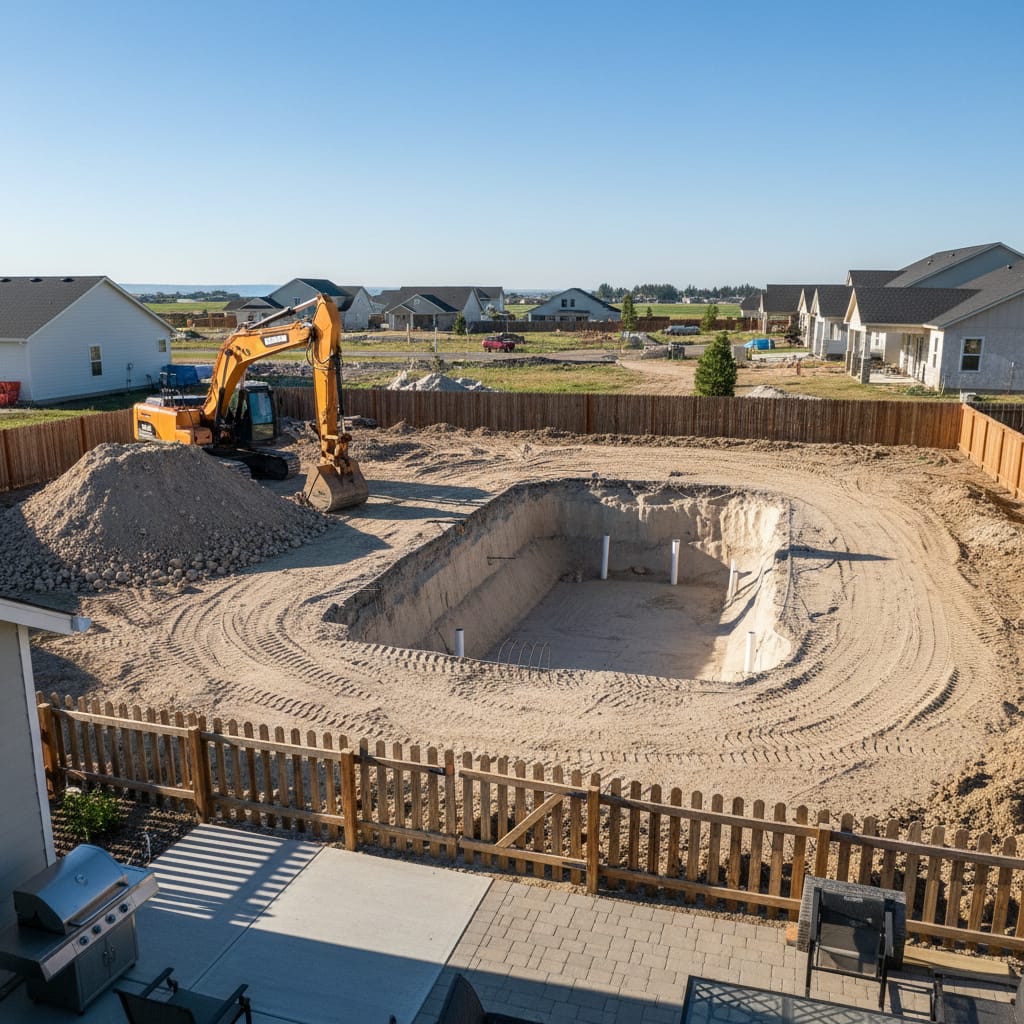
Richland gets far less rain than western Washington, so drainage problems can be easy to overlook until they cause real damage. Irrigation, snowmelt, a sudden storm, or a downspout that empties in the wrong spot can still leave water sitting against a foundation or soaking a side yard for days. French drain installation in Richland is one of the most reliable ways to collect that water below the surface and carry it somewhere it can do no harm.
Below are six signs that a yard may need a French drain, followed by how the system works and what a well-built installation looks like. If you are still deciding which kind of drainage fix fits your property, our guide to signs your property needs professional grading and drainage work is a helpful place to start.
1. Water Pools Near the Foundation
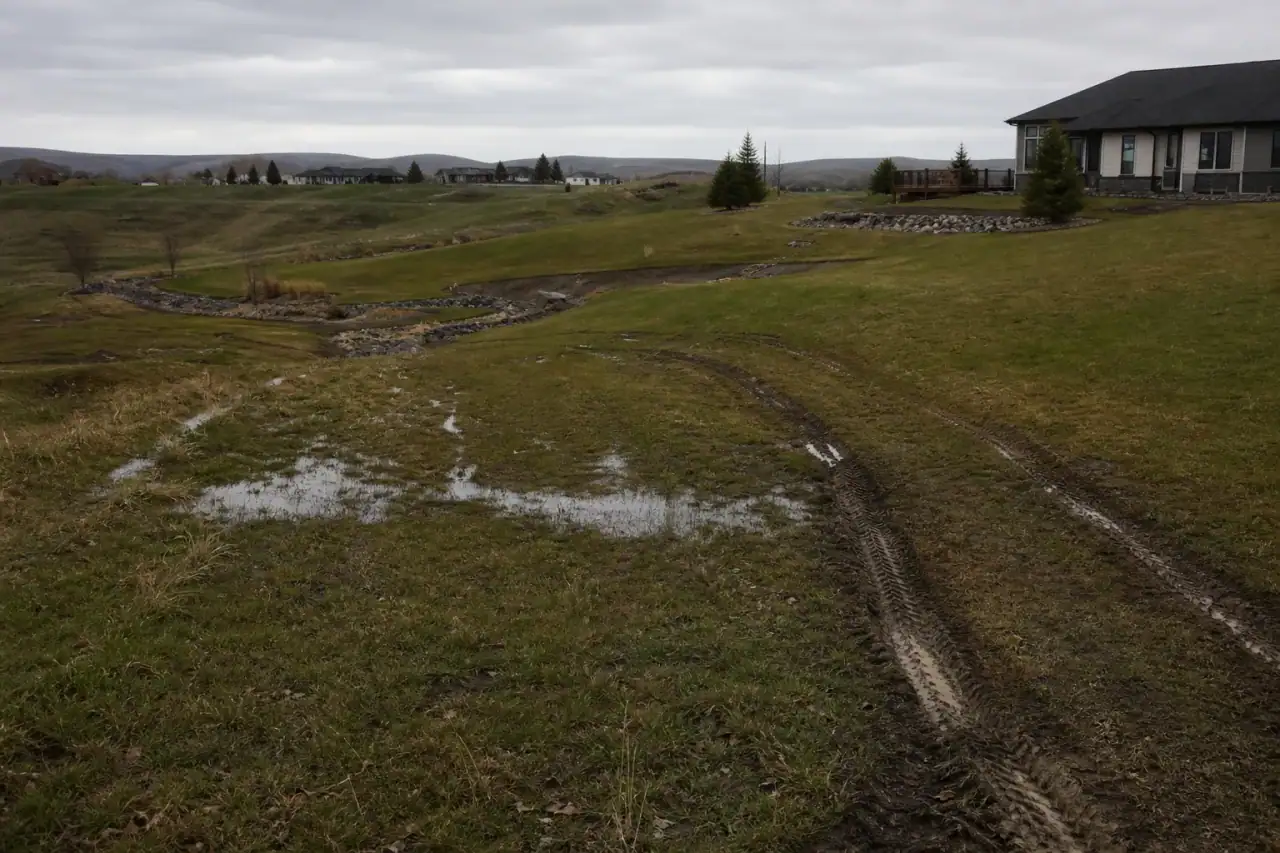
Puddles that form along the house after watering or rain are the clearest warning sign. Water that sits against a foundation can find its way into crawl spaces and basements, soften the soil that supports footings, and lead to cracks over time. If the ground slopes toward the house or the soil next to it stays damp, a French drain along that side of the home can intercept the water before it reaches the foundation.
2. A Side Yard Stays Soggy or Muddy
Narrow side yards between homes are common problem areas in Richland subdivisions. They often sit lower than the front and back yards, collect runoff from two roofs, and get little sun to dry them out. The result is a strip of mud that never quite firms up. A French drain running the length of the side yard can collect that water and carry it to the street, a dry well, or another approved outlet.
3. The Crawl Space or Basement Gets Damp
A musty smell, water stains, or efflorescence (a white, chalky residue) on foundation walls are signs that moisture is getting in from outside. While some of these problems need attention inside the home, many start with water collecting in the soil around the foundation. Lowering how much water reaches the foundation is often the most effective and least invasive first step.
4. Downspouts Dump Water Where It Cannot Escape
A single downspout can release a large amount of water during a storm. When it empties onto flat ground, into a planter, or next to the foundation, that water has nowhere to go. A French drain or a solid drain line tied into the downspout can carry the water well away from the home. This is a common add-on during French drain installation and often solves the problem on its own.
5. Erosion or Washouts on a Slope
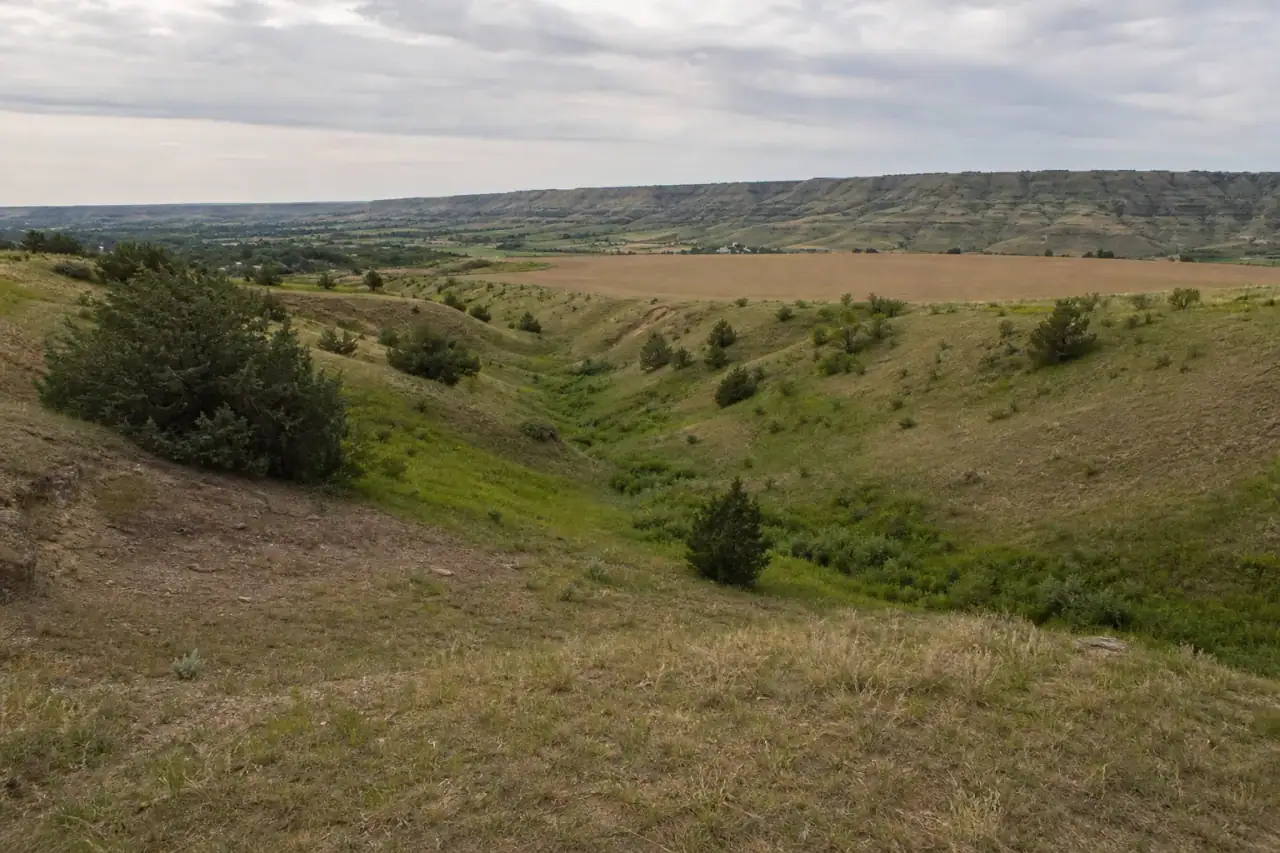
On sloped lots, water running across the surface can carve small channels, wash out landscaping rock, and carry soil onto patios or driveways. A French drain placed across the slope can catch water that moves through the upper layer of soil and redirect it before it reaches the areas you want to protect. On larger acreage, a swale or culvert may be a better fit, which we compare in French drain vs swale vs culvert.
6. The Lawn Has Dead or Overly Green Spots
Patches of lawn that are always greener, spongy underfoot, or dying from too much water point to places where water collects below the surface. These spots are easy to dismiss as sprinkler problems, but they often show where the ground holds water. Mapping them is a useful first step in deciding where a French drain should run.
How a French Drain Works
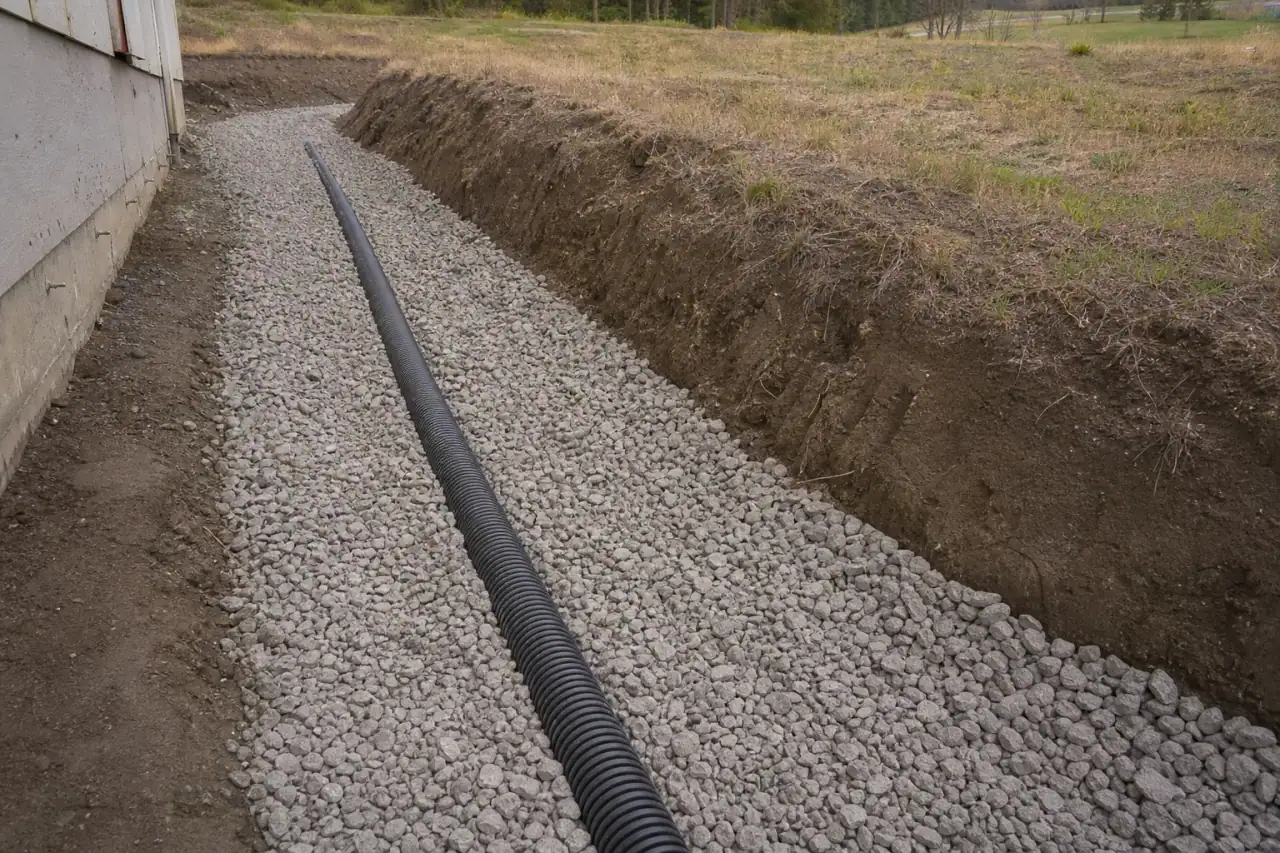
A French drain is a gravel-filled trench with a perforated pipe at the bottom. Water in the surrounding soil seeps into the gravel, enters the pipe through its perforations, and flows downhill along the pipe to an outlet. Because the system works below the surface, it can be covered with soil, sod, or decorative rock once it is installed, so the yard looks finished.
The key is slope. The trench and pipe must fall steadily toward the outlet so water keeps moving instead of sitting in the line. The outlet also matters. Water has to go somewhere it is allowed to go, such as a dry well, a lower part of the property, or a street drain where permitted. Planning the outlet first is part of a good design.
What a Properly Built French Drain Includes
- A trench dug to the right depth with a steady fall toward the outlet
- Filter fabric to keep fine soil from clogging the gravel
- Clean, washed drain rock around the pipe
- Perforated pipe sized for the amount of water expected
- A planned outlet, such as a dry well, daylight point, or approved drain
- Cleanouts where needed so the line can be flushed in the future
- Backfill and a finished surface that matches the rest of the yard
What Installation Day Looks Like
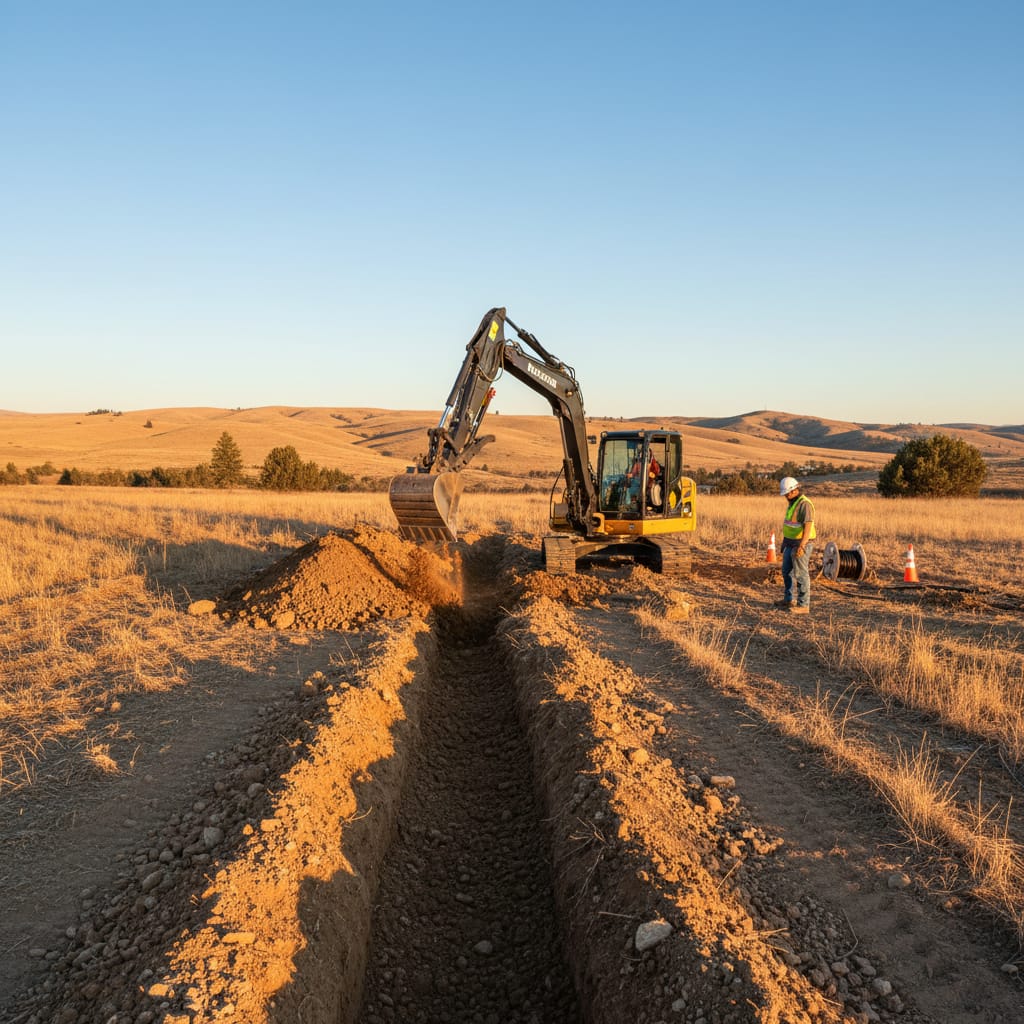
Most residential French drains in Richland are installed in one to a few days, depending on length, depth, and access. The crew marks the route and outlet, cuts and removes sod where it can be saved, and digs the trench with a mini excavator or trencher. The fall of the trench is checked with a level as the work goes, since a section that dips or flattens out will hold water instead of moving it.
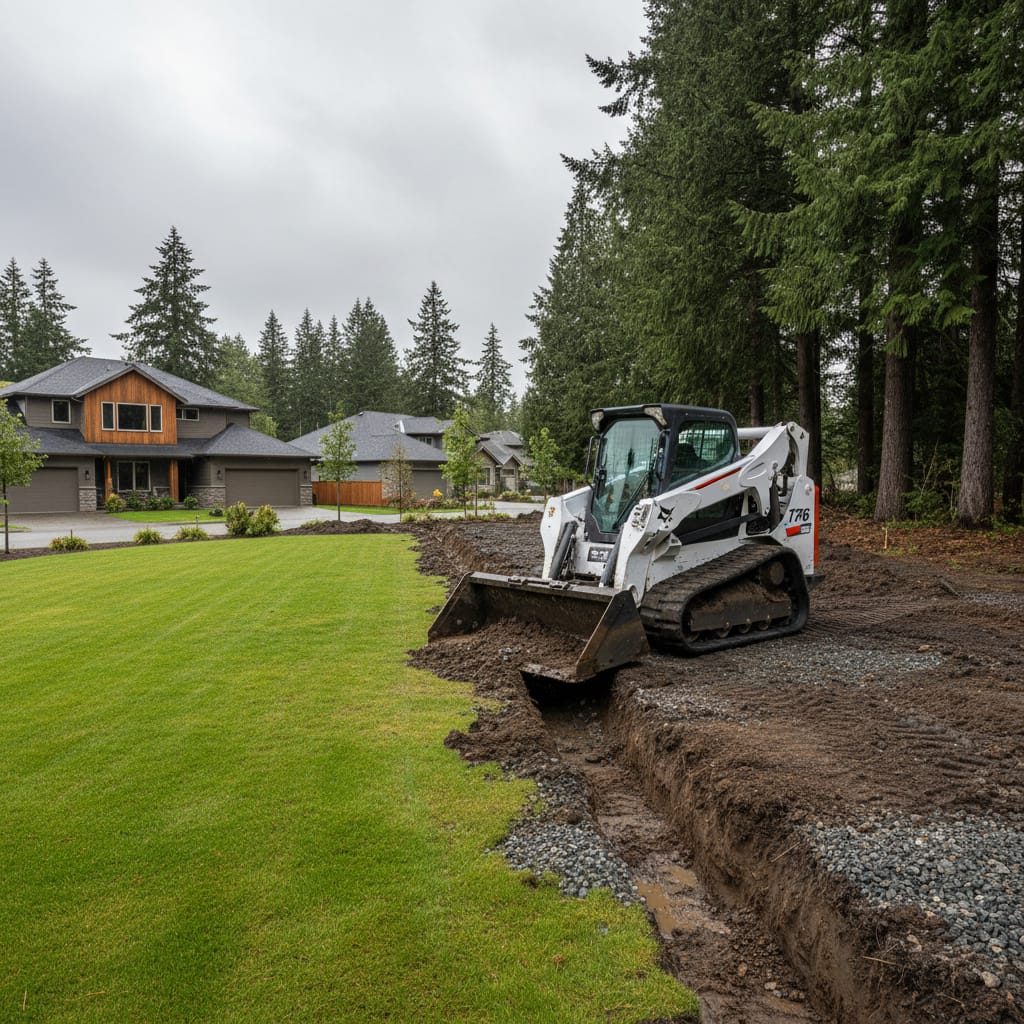
Once the trench is right, filter fabric goes in, followed by a bed of drain rock, the perforated pipe, and more rock over the top. The fabric is wrapped over the gravel, and the trench is backfilled and finished with soil and sod, rock, or whatever surface matches the yard. Before the job wraps up, running water through the system with a hose is a simple way to confirm it flows to the outlet the way it should.
When a French Drain Is Not the Right Fix
French drains are not the answer to every drainage problem. When large volumes of surface water move across a property, a swale or regrading may do more. When a single low spot is the issue, reshaping the ground may be enough. Our article on when drainage repairs make more sense than regrading explains how to tell the difference, and common drainage problems on rural properties covers the fixes that work on larger lots.
Scheduling French Drain Installation in Richland
The best time to install a French drain is before water damage gets worse, and ideally during dry weather when the ground is easy to work. If you are seeing any of the signs above, French drain installation in Richland can protect your foundation, dry out problem areas, and make the yard usable again. White Arrow Land Works designs and installs French drains from trench to finished surface. Learn more about our drainage and erosion control services, or contact us to schedule a site walk.
Frequently asked questions
How deep should a French drain be?
Most residential French drains are dug somewhere between about one and a half and three feet deep, but the right depth depends on where the water is, the soil, and the slope needed to reach the outlet. A drain protecting a foundation may need to be deeper than one that dries out a lawn.
Where does the water from a French drain go?
It flows through the pipe to an outlet, such as a dry well, a lower area of the property where it can daylight safely, or a street drain where that is allowed. Choosing the outlet is one of the first steps in designing the system.
How long does a French drain last?
A well-built French drain with filter fabric, clean gravel, and good slope can work for many years. Adding cleanouts makes it possible to flush the line if sediment builds up, which helps it last longer.