What you will learn
- Confirm equipment access before you sign a pool contract
- Know what Tri-Cities soil can mean for a pool excavation
- Plan where the excavated dirt goes before digging starts
- Set the finished grade so water drains away from the pool
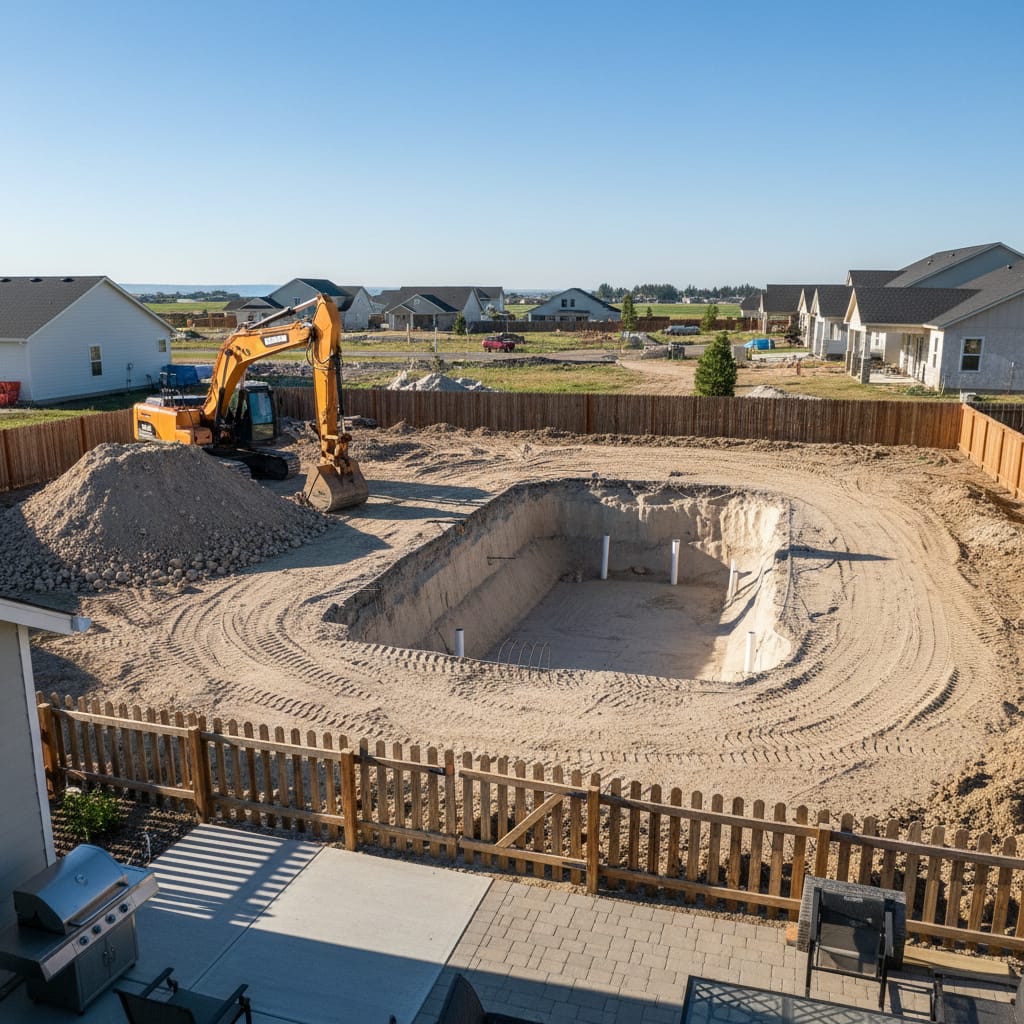
A backyard pool is one of the biggest projects most homeowners ever take on, and the part that decides how well it turns out happens before any concrete, liner, or tile goes in. Pool digging in Kennewick sets the depth, the shape, the base the shell sits on, and the way water moves around the finished deck. When the excavation is planned well, the rest of the build goes smoothly. When it is rushed, the problems show up later as settling, cracked decking, or water running toward the house.
Whether you are installing a precast plunge pool or a custom in-ground pool, the questions below are the ones worth answering before the excavator rolls into your yard. They come up on nearly every backyard pool project in the Tri-Cities, and each one is easier and cheaper to solve on paper than in the middle of a dig. If your yard also needs leveling before construction, our homeowner's guide to site leveling before a shop, shed, or pool covers that first step in more detail.
1. Can Equipment Actually Reach the Pool Site?
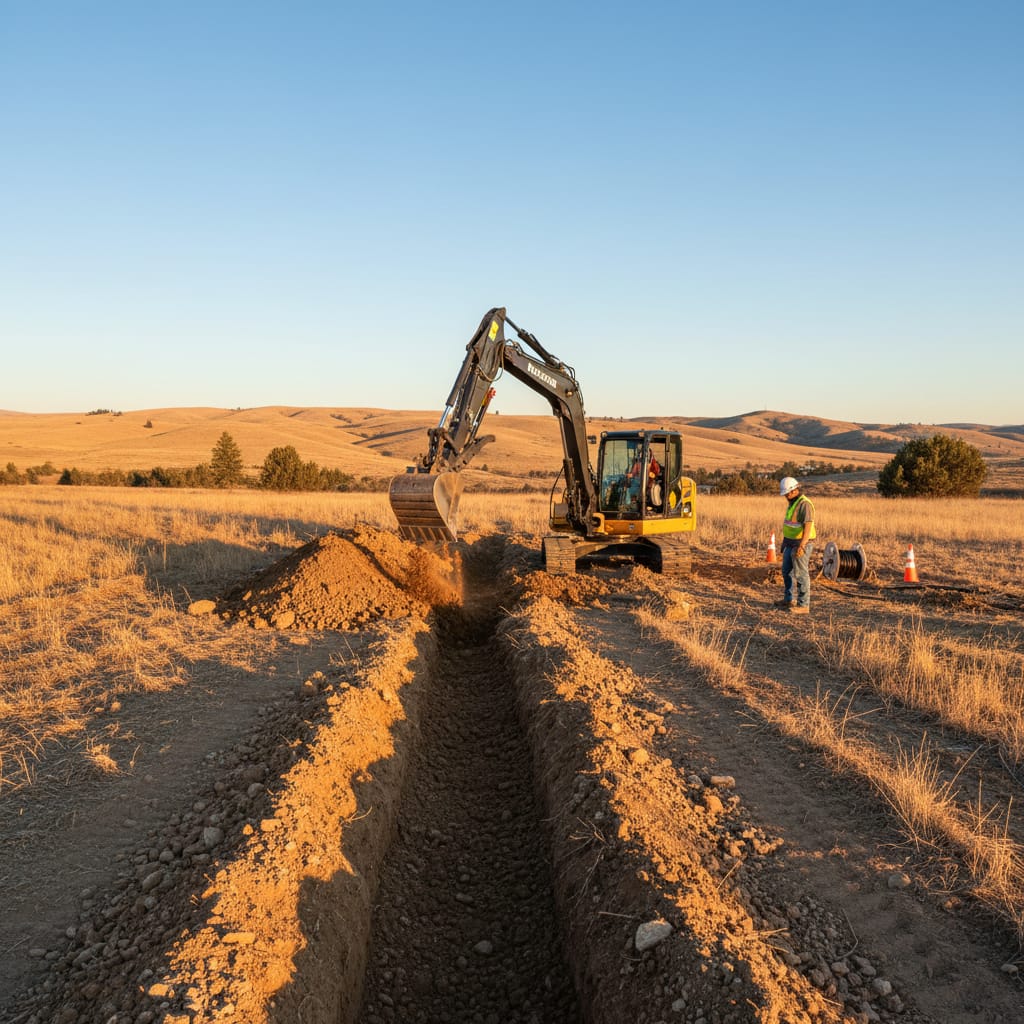
The first thing to check is access. An excavator, a skid steer, and dump trucks all need a path from the street to the dig. Many Kennewick backyards sit behind a fence with a single gate, a narrow side yard, or a slope between the driveway and the lawn. A typical gate opening may be too tight for the machine that can dig the pool efficiently, which can mean removing a fence panel, working with smaller equipment, or planning a temporary access route.
It also matters what the equipment drives over. Sprinkler lines, a septic drain field, a new lawn, or a concrete patio can all be damaged by heavy tracks. Walking the route with your contractor before the job starts lets you protect what you want to keep and decide what can be repaired afterward. Good access planning is also one of the biggest factors in cost, which we explain in what goes into excavation costs.
2. What Is Under the Surface?
Soil in the Tri-Cities varies more than most people expect. Many Kennewick lots have sandy or silty soil that digs easily but can slough off the sides of a deep excavation if it dries out or gets wet. Other properties run into compacted layers, buried rock, or old fill left behind from when the subdivision was built. Each of these changes how steep the excavation walls can be, how much over-dig is needed, and how the base under the pool should be prepared.
You do not need a full geotechnical report for most backyard pools, but you do want an excavator who looks at the ground before quoting. A few test holes or a careful look at nearby excavations can reveal whether the soil will hold a clean wall or needs more room and extra base material. Knowing this up front prevents surprise change orders once digging begins.
3. Where Are the Buried Utilities?
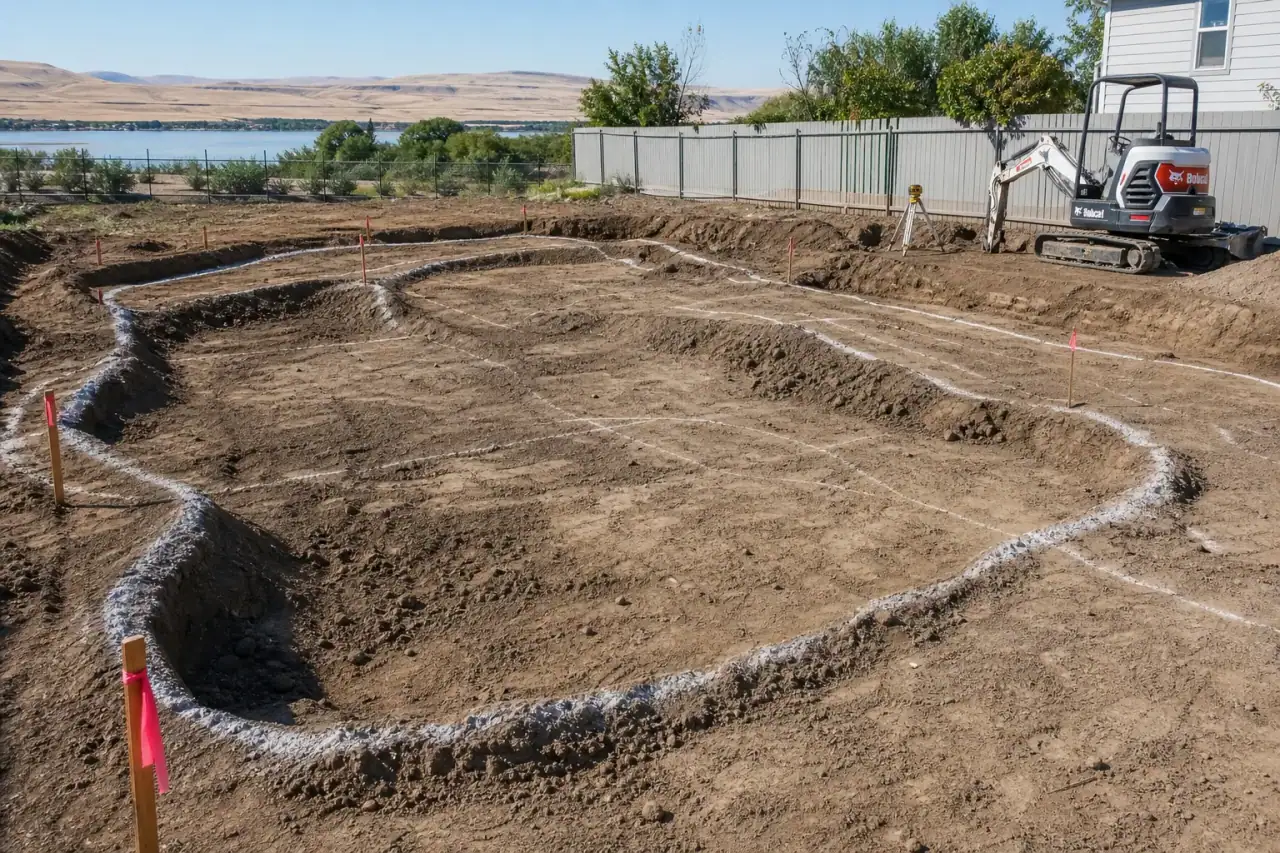
Before any digging in Washington, the utility locate service needs to be called through 811 at least two business days ahead. They mark public lines such as gas, power, water, and communications. What they do not mark are private lines: the power run to a detached shop, a sprinkler main, a gas line to a backyard grill, or a septic system. Those are the lines most often hit during backyard excavation.
Walk the yard with the original site plan if you have one, and point out anything you know about to your excavator. If a line runs through the planned pool footprint, it is much easier to reroute it before the dig than to repair it after. This is also a good time to plan the trenches for the pool's own power, gas, and plumbing. Our article on planning excavation and utility trenching walks through how to sequence that work.
4. Where Will All the Dirt Go?
Even a modest pool produces a surprising amount of soil. A small plunge pool can still mean several truckloads, and a full-size in-ground pool can mean many more once the soil loosens up out of the hole. That material has to go somewhere. Some of it may be reused for backfill around the shell or to build up a low area of the yard, and the rest usually needs to be hauled off.
Decide this before the dig starts. Stockpiling dirt on the lawn for weeks kills the grass, creates mud after rain or irrigation, and can wash into the excavation. Ask your contractor how much material they expect, where it will be staged, and whether hauling is included in the price. A clear plan keeps the yard usable and the job moving.
5. How Will Water Drain Around the Finished Pool?
A pool deck that slopes the wrong way sends splash water, rain, and snowmelt toward the house or into the pool. Over time that water can soften the soil around the shell, undermine the deck, and leave puddles that never quite dry. The finished grade around the pool should carry water away from both the pool and the home, toward a lawn area, a swale, or a drain.
This is easiest to get right during excavation, when the ground is open and grades can be set with a level. If the yard already has drainage trouble, solve it as part of the pool project. Our comparison of French drains, swales, and culverts explains which option fits which problem.
6. Is the Base Ready for the Pool Shell?
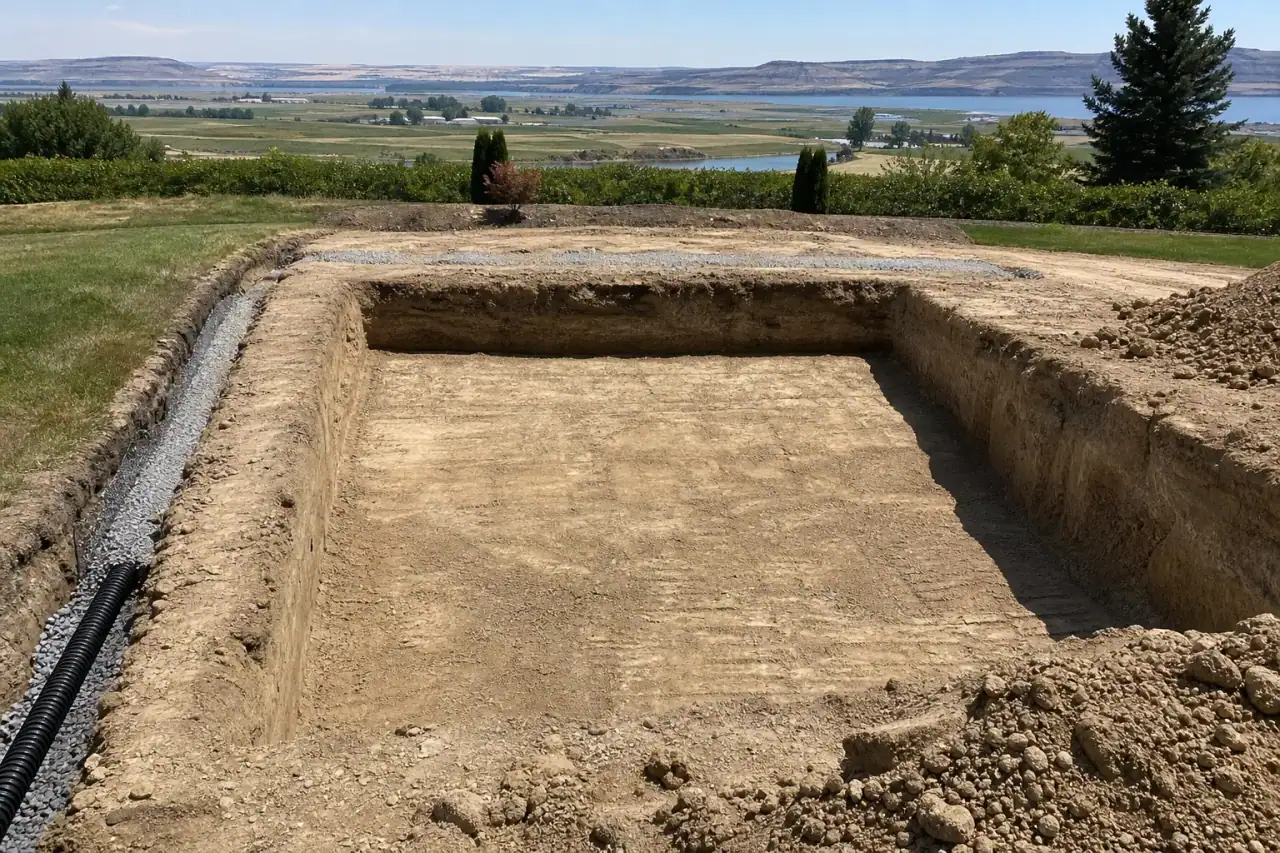
What the pool sits on matters as much as the pool itself. A precast plunge pool needs a flat, compacted base so the shell is supported evenly. A custom in-ground pool needs the floor and walls dug to the pool builder's plan, with soft spots removed and replaced with compacted material. Skipping this step is one of the main reasons pools settle or decks crack in the first few years.
Ask your excavator how they will check depth and level, what base material they will use, and how it will be compacted. On a well-run job, the base is checked against the plan before the shell is set or forms go in, not after.
7. Who Handles Backfill and Final Grading?
Once the pool is set, the gap between the shell and the excavation wall has to be backfilled in lifts and compacted, then the surrounding area graded for the deck and landscaping. When the pool builder and the excavator are different companies, this handoff is where things fall through the cracks. Make sure everyone knows who is responsible for backfill, compaction, and final grade before the job starts.
Having one crew handle the dig, the base, the backfill, and the finished grading means one schedule, one point of contact, and no finger-pointing if something needs adjusting. It also means the person who dug the hole understands exactly how the ground around it needs to be finished.
A Simple Pool Digging Checklist
- Measure the access path and identify anything that must be protected or removed
- Call 811 and mark any private lines you know about
- Ask how the soil will be checked and how much over-dig to expect
- Agree on where excavated soil will be staged, reused, or hauled
- Set finished grades so water drains away from the pool and the house
- Confirm who handles base prep, backfill, compaction, and final grading
Getting Started With Pool Digging in Kennewick
A pool that is dug, based, and graded correctly is a pool you can enjoy for decades without chasing settlement or drainage problems. If you are planning pool digging in Kennewick, White Arrow Land Works can walk the site with you, talk through size and placement, and handle the excavation through final grading. Learn more about our pool construction services, or contact us to set up a site visit.
Frequently asked questions
How long does pool digging take in Kennewick?
The excavation itself often takes one to a few days for a typical backyard pool, depending on size, soil, and access. The full project, including base preparation, setting the pool, backfill, and grading, takes longer and depends on the pool type and the pool builder's schedule.
Do I need to call 811 before digging a pool?
Yes. In Washington, you need to contact 811 at least two business days before excavating so public utility lines can be marked. Private lines, such as sprinkler mains or power to a shop, are not marked, so point those out to your excavator as well.
Can the dirt from my pool be used elsewhere in the yard?
Often, yes. Good excavated soil can be reused to fill low spots, build up planting areas, or backfill around the pool. Material that is too rocky or poor quality is usually hauled off. Your excavator can tell you how much is reusable once digging starts.